Stock Valuation History by Warehouse
What is the value of each warehouse — today, or at any past date? Odoo values your stock at the company level, and stops there. This module adds the missing dimension in the form of a pure reporting layer: it does not change how Odoo values your stock.


Présentation du module

/ Odoo 19 · Inventory
Stock valuation by warehouse
What is the value of each warehouse — today, or at any past date? Odoo values your stock at the company level, and stops there. This module adds the missing dimension in the form of a pure reporting layer : it does not change how Odoo values your stock.

To read first
This is a reporting module. Your valuation does not change.
No valuation method is replaced or modified. Nothing is written in a valuation record, no cost layer is consumed, no accounting entry is made, and not a single existing figure moves. Your stock account, your cost of goods sold, and your product costs remain exactly what they were before the installation.
The module reads the values produced by Odoo and records which warehouse they landed in, so you can finally read the distribution — and read it at a past date. That's the whole product.
The blind spot
Your accountant knows the total. No one knows the distribution.
Odoo calculates a single stock value for the entire company. The warehouse never enters the calculation, and no report accumulates it over time.
How does it work
It never calculates a value. It records where Odoo's value went.
It is this single design decision that makes the figures reliable.
1
Each validated movement writes a line
A receipt credits the destination warehouse, a delivery debits the origin one — with the exact value calculated by Odoo for this movement. Your team validates the transfers as before; nothing new to fill out, nothing to forget.
2
Nothing is ever rewritten
A late supplier invoice or a cost revision never affects the past: the difference is recorded on the day it arrives. A valuation printed for December 31 gives the same figure in June as in January.
3
The value at a date is a sum, not a recalculation
Consulting a past date adds the lines that precede it. Each figure on the screen remains clickable, down to the movement and transfer that produced it. No figure is a dead end.
What sets us apart
Why you can present these figures to an auditor
The sum of the warehouses equals the total of the company
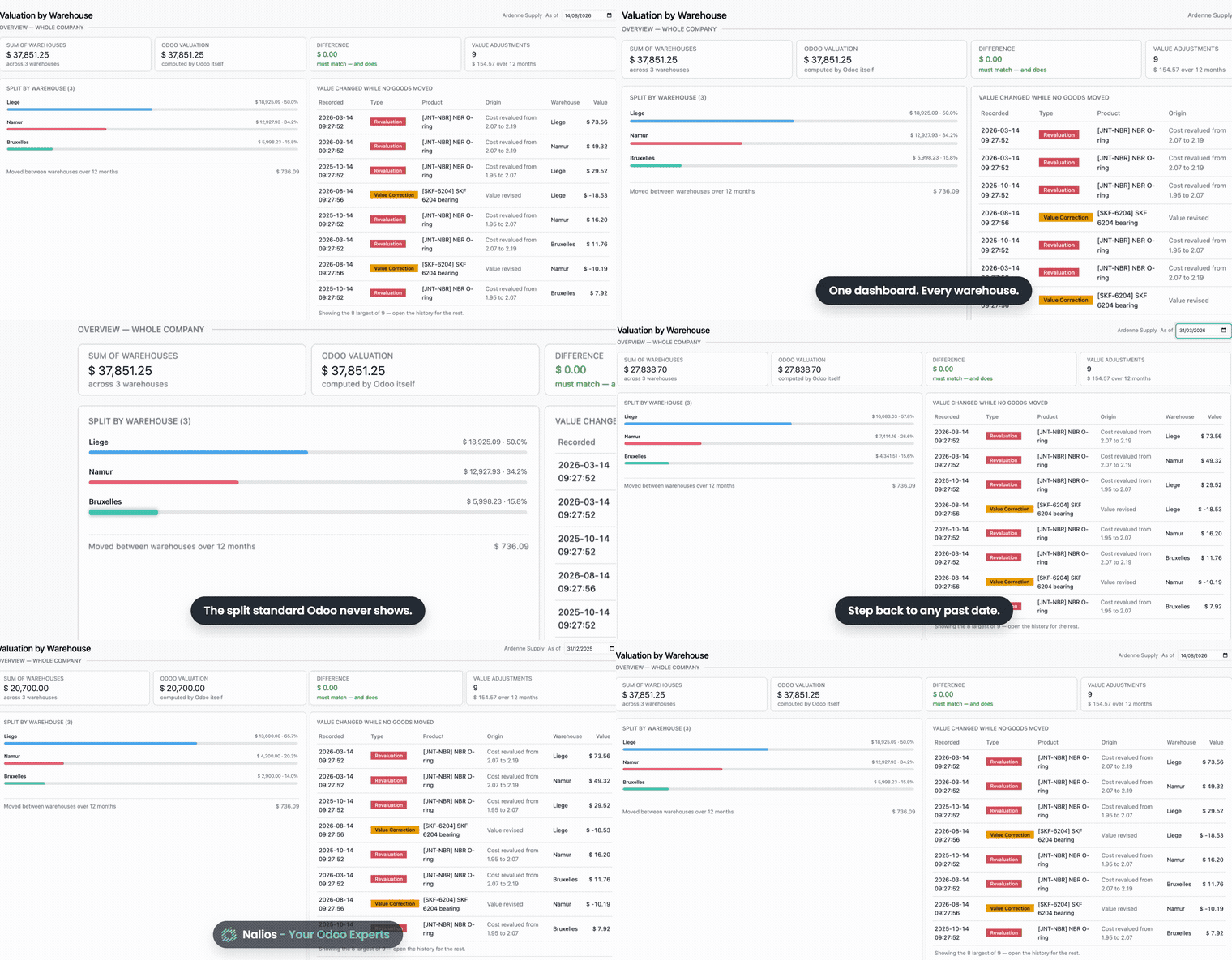
Not approximately — by design. Each line traces back to a value calculated by Odoo itself, so the two readings cannot diverge. The dashboard displays both totals side by side with a zero variance, so you can prove it rather than promise it.
A closure remains a closure
The history is a log: lines are added, never modified, and deletion is blocked in the code. A figure you have validated cannot change behind your back — and a late correction remains visible, dated, and linked to the movement it corrects.
It follows Odoo's cost methods, all three
Standard price, average cost, and FIFO are managed without re-implementing any. Price variances remain outside of stock value, changes in average cost are reflected across all warehouses holding the product, and products valued by batch retain the cost specific to each batch.
The value that moves without the goods moving is highlighted
Late invoices, landed costs, and cost revisions have their own list, separate from the usual inter-warehouse transfers that would otherwise drown them out. This answers the question that a management controller really asks: what has changed here without any shipment explaining it?
Daily use
Three doors to the same history
The dashboard
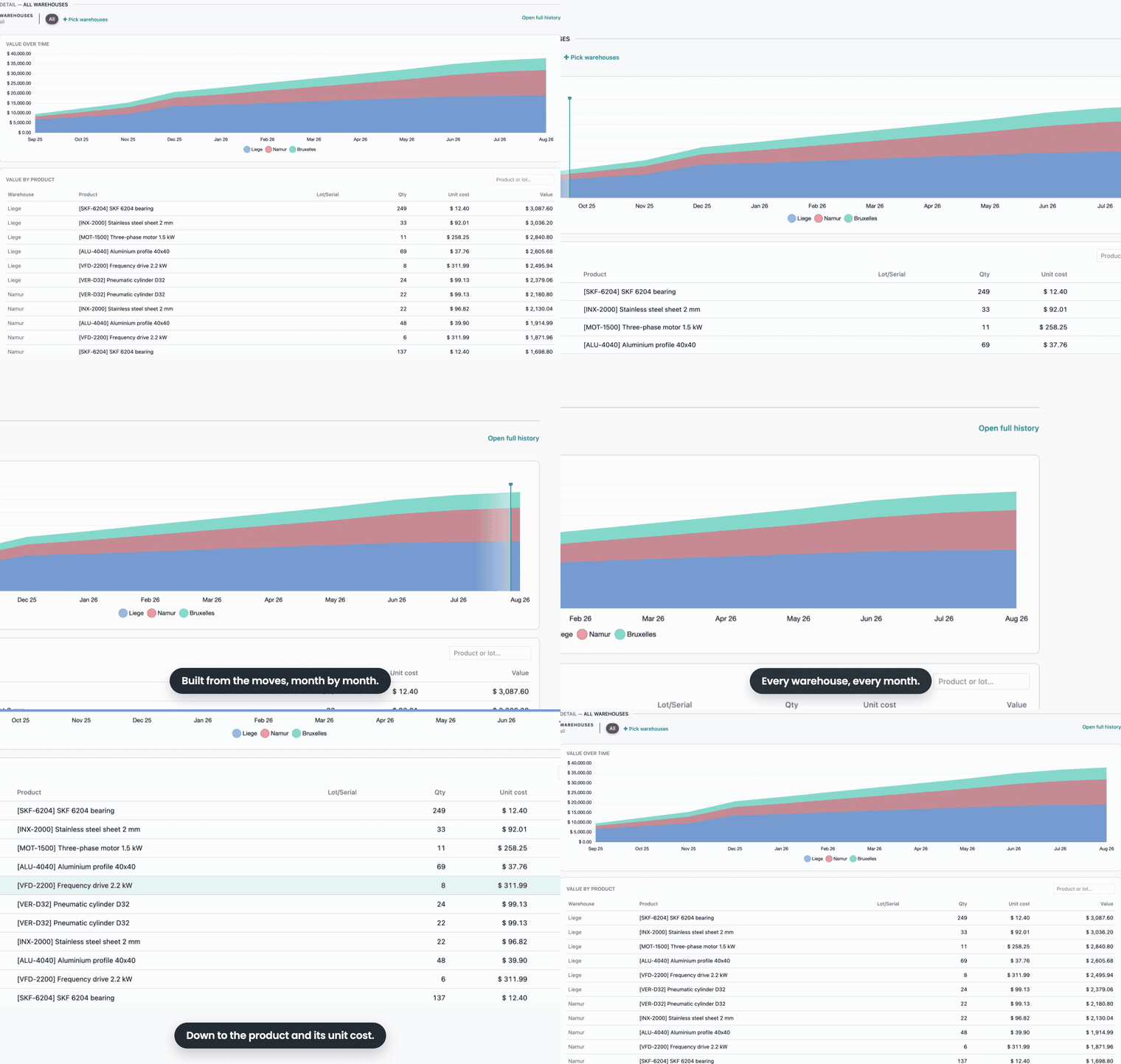
The value over twelve months stacked by warehouse, the distribution on the chosen date, the reconciliation with Odoo, and the value of each product in each warehouse with its implicit unit cost. It handles the load of a fleet of thirty stores.
The closing report
Choose a date, possibly a set of warehouses or product categories, and get a pivot table that you can group, explore, and export like any other Odoo report. The accountant's gesture, in three clicks.
The warehouse itself
Each warehouse record carries its stock value in the form of a button. A click opens what built it, line by line. The logistics manager's gesture, without leaving the record.
Under the hood
What it touches, and what it leaves intact
The history starts on the day of installation
The module does not reconstruct your past: an opening balance per warehouse takes the stock in place on the day of installation, and each subsequent movement refines the picture. Install it before your next closing and you will have a full year to the next. It does not pass any accounting entries and does not change any existing figures — its installation is reversible in the only way that matters: nothing that belongs to you has been modified.
A question? A problem? Talk directly to those who designed it.
We will respond within 8 business hours.
Write to us directly at
ama@nalios.be
Published by
Nalios — Odoo Gold Partner, Belgium — nalios.be